
10 products
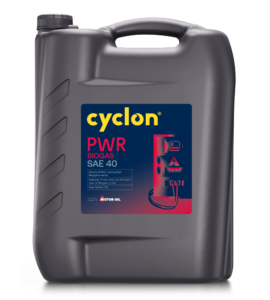 Cyclon PWR BIOGAS
40
Premium lubricant formulated with hydrogenated bases and advanced additives to extend oil change intervals…
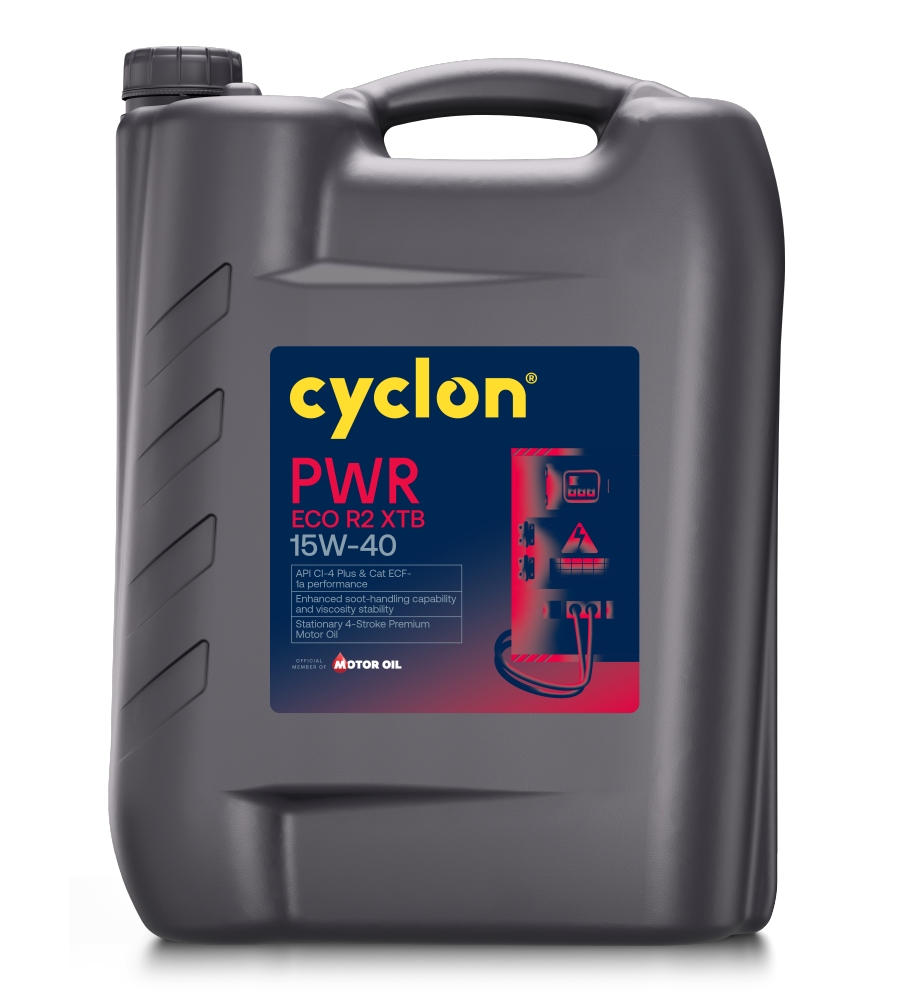 Cyclon PWR ECO R2 XTB
15W-40
Sustainable high-performance diesel engine oil for heavy-duty, high-mileage engines operating under severe conditions, including…
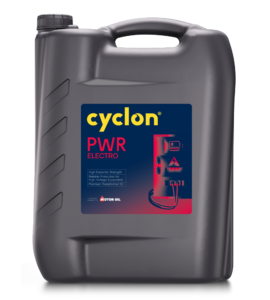 Cyclon PWR ELECTRO
Non-inhibited oil, manufactured from high quality naphthenic feedstocks. It offers good dielectric properties, good…
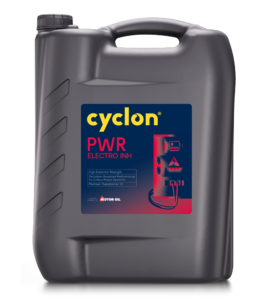 Cyclon PWR ELECTRO INH
Inhibited oil, manufactured from naphthenic base oils and antioxidant additives. Highly resistant to oxidation,…
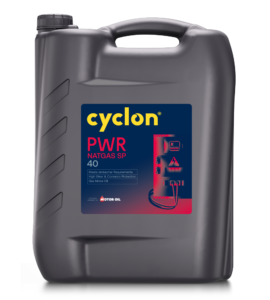 Cyclon PWR NATGAS SP
40
High performance, low ash lubricant oil for stationary natural gas engines, both naturally aspirated…
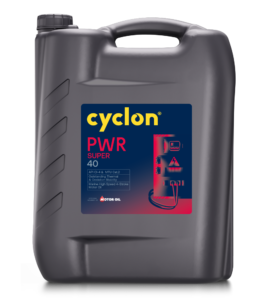 Cyclon PWR SUPER
40
High‑quality SHPD monograde engine oil formulated for diesel power‑generation units requiring stable performance and…
 Cyclon PWR SUPER LM
40
High-performance, high-alkalinity lubricant for medium-speed engines running on distillate fuels, biodiesel or LNG in…
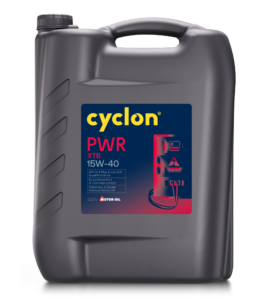 Cyclon PWR XTB
15W-40
High-performance diesel engine oil engineered for heavy-duty, high-mileage engines operating under severe conditions with…
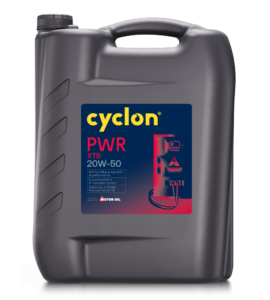 Cyclon PWR XTB
20W-50
High-performance diesel engine oil engineered for heavy-duty, high-mileage engines operating under severe conditions with…
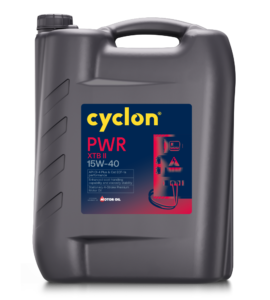 Cyclon PWR XTB II
15W-40
Premium super high-performance diesel engine oil designed for heavy-duty engines under severe conditions and…
Generators carry an enormous share of the electricity used in this country — neighbourhood sets, telecom towers, factories, hospitals, cold stores and oilfield camps. Almost all of them run long hours on locally available fuel, which makes the selection logic different from a truck.
Do not use a diesel engine oil in a gas engine. Gas engines need controlled low ash: too much ash causes deposits on valve seats and poisons exhaust catalysts, and the damage accumulates quietly over thousands of hours.
PWR XTB 15W-40 is the default. It starts more easily on a cold winter night in Sulaymaniyah or Kirkuk, carries the broader approval list, and is available in a 20L pail as well as the 208L drum. Move to PWR XTB 20W-50 for high-hour engines whose clearances have opened up, and for continuous high-load running in extreme ambient temperatures where the operator wants a thicker film and lower oil consumption.
The category also covers electrical insulating oils, which are a different product entirely:
For a transformer expected to stay in service for decades, the inhibited oil is normally the economic choice; the non-inhibited grade suits applications where the oil is changed or reconditioned on a defined cycle. Either way, insulating oil must be tested, not assumed — dielectric strength and moisture content decide when it needs attention.
Count running hours, not calendar months. A set running twelve hours a day accumulates a truck's annual duty in a matter of weeks, so the hour meter is the only reliable service record. Start from the engine manufacturer's figure, commonly 250 hours, and let used-oil analysis decide any extension — reserve alkalinity, soot, viscosity and fuel dilution. On high-sulphur fuel, assume shorter rather than longer.
One practical point that costs operators more than oil choice does: generator air intakes in this climate ingest enormous quantities of dust. An air filter that has been cleaned by beating it against a wall is no longer an air filter, and the abrasive it lets through will wear the engine out regardless of what is in the sump.
Cyclon PWR XTB 15W-40 for most sets, or PWR XTB 20W-50 for high-hour engines with worn clearances and continuous high load in extreme ambient temperatures. PWR XTB II 15W-40 suits operators wanting extended drains and tighter deposit control, and PWR ECO R2 XTB 15W-40 offers the same performance on re-refined base oils. These are formulated for fuel with sulphur above 1000 ppm, which describes most diesel available locally. In a continuously running engine that sulphur becomes crankcase acid far faster than it does in a truck, and the acid control in the XTB range is the reason to use it rather than an ordinary truck oil.
No. Gas engines need a controlled low-ash oil: Cyclon PWR NATGAS SP 40 for stationary natural gas engines including catalyst-equipped systems, and Cyclon PWR BIOGAS 40 for biogas units where resistance to oxidation and nitration matters. Too much ash causes deposits on valve seats and poisons exhaust catalysts. The damage builds quietly over thousands of hours rather than announcing itself, which is why the wrong oil often goes unnoticed until the engine needs a head overhaul.
By running hours, not by calendar. A set running twelve hours a day accumulates a truck's annual duty in weeks, so the hour meter is the only reliable service record. Start from the engine manufacturer's figure, commonly 250 hours, and let used-oil analysis decide any extension, looking at reserve alkalinity, soot, viscosity and fuel dilution. On high-sulphur fuel, assume the interval should be shorter rather than longer. Also check the air filter seal at every service, because generator intakes in this climate ingest very large amounts of dust.
Cyclon PWR ELECTRO INH contains antioxidant additives that greatly extend service life, resist oxidation and prevent sludge and acid formation, while Cyclon PWR ELECTRO is a non-inhibited naphthenic oil with good dielectric properties and heat transfer. For a transformer expected to remain in service for decades the inhibited oil is usually the economic choice. In either case insulating oil should be tested rather than assumed: dielectric strength and moisture content determine when it needs attention.
Not sure which product a vehicle, machine or fleet needs? Try the Cyclon oil selector, or send us the details and we will specify it in writing.